
Top 3 Ecommerce Platforms that are Guaranteed to Meet your Business Needs
In
a world where eCommerce has become the future of retail, countless
E-market platforms have flooded the scene to help businesses set up
an online store. The eCommerce platform market has reached a
saturation point, making it quite difficult for retailers to figure
out which eCommerce platform to choose. Making the right choice is
quite important as the success or failure of your online business
depends solely on how efficient your eCommerce support system is.
A
wrong decision will make running and managing an online experience a
nightmarish experience. If you’re confused by the magnitude of
options, here are three eCommerce platforms that are the popular
choices for most successful online retailers:
1)
Magento
Meet
Magento – an eCommerce platform that has revolutionized the online
shopping space by providing online retailers a chance to setup a
store with unlimited functionality. It is no wonder that Magento
powers most of the Internet Retailers Top 1000 websites. It offers
compatibility with mobile and desktop and comes loaded with shopping
cart solutions and payment gateways. Not just that – since it’s
an open source platform, the existing code can be built upon and
customized endlessly to fit any retail business’ needs.
The
downside: Its complexity can baffle a person with no
technical knowledge. Bringing in a Magento expert is a must!
2)
Shopify
Shopify
is a wise choice for small businesses! Shopify doesn’t just provide
an online store, but it offers an excellent support system that can
help website owners overcome technical hassles without a hitch. It
also provides full integration with social media for purchases such
as buyable Pinterest pins, Facebook shop, Twitter ‘buy now’
button and more, allowing owners to reach out to larger audiences.
The
downside: Setting up a Shopify takes forever. It’s also
slightly pricey when compared to other platforms since add-ons and
extensions need to be purchased if necessary.
3)
WooCommerce
If
you already have a WordPress website, get WooCommerce plug-in to
extend your site’s functionality to eCommerce. Easy to setup,
cost-effective and smoothly merging with your Wordpress site, this
plug-in provides extensive flexibility, store customization, a
multitude of payment of options and everything it takes to set up a
running eCommerce store.
The
downside: WooCommerce cannot be scaled to fit the needs of a
large eCommerce store.
All
of these platforms work well for businesses. Their core functionality
is the same, with slight variations in options and features. The
‘best’ eCommerce platform is the one that’s right for your
business and fits your needs. So, choose wisely!
Four Things to keep in Mind before Hiring a PHP Developer
Gone
is the age where business websites merely comprised of static
information pages that listed details of the company. Today,
companies expect websites to help them rope in new customers, be a
spokesperson in its own sense, and increase their exposure on a
global scale. To achieve this, a highly versatile, reliable,
cost-effective and dynamic website becomes a necessity. With PHP
being the front runner in the web development market for the last few
years, the demand for developers has hit an all-time high.
Choosing
the right developer is vital, because ultimately, it all comes
down to the competence of the developers that can help transform
your vision into reality. So, before zeroing,
here are four things you need to keep in mind:
#1 Relevant experience
Is
the developer merely a newbie? Has the developer handled similar
projects in the past? Ask these standard questions to determine the
level of experience has. Your entire online
business is at stake. Entrusting the responsibility of building your
website to an inexperienced is a strict no-no.
#2
Techno-savvy or not?
Every
since PHP made its foray into the world of web development, it has
undergone a series of changes. A developer who’s stuck behind
the times and unaware of the latest trends and technologies in
practice will only weigh your business down. Instead, that have advanced technological skills and certifications
to prove their competence.
#3 A Burst of Creativity
There
are probably hundreds of other businesses who’re vying for the
attention of your customers. How do you ensure that it is your
business that grabs the spotlight? You need a PHP developer who
thinks out-of-the-box and brings innovative and customized
development suggestions to the table. A look at the portfolio of the
Development Company can give you a rough idea of how
much uniqueness will add to your business website.
#4 Budget constraints
Do
you think that hiring a good developer will cost you a fortune?
Think again! With the demand for developers soaring high, an
increasing number of developers are offering their services at
affordable prices. Choose a LAMP developer who offers the best for the
least amount of investment.
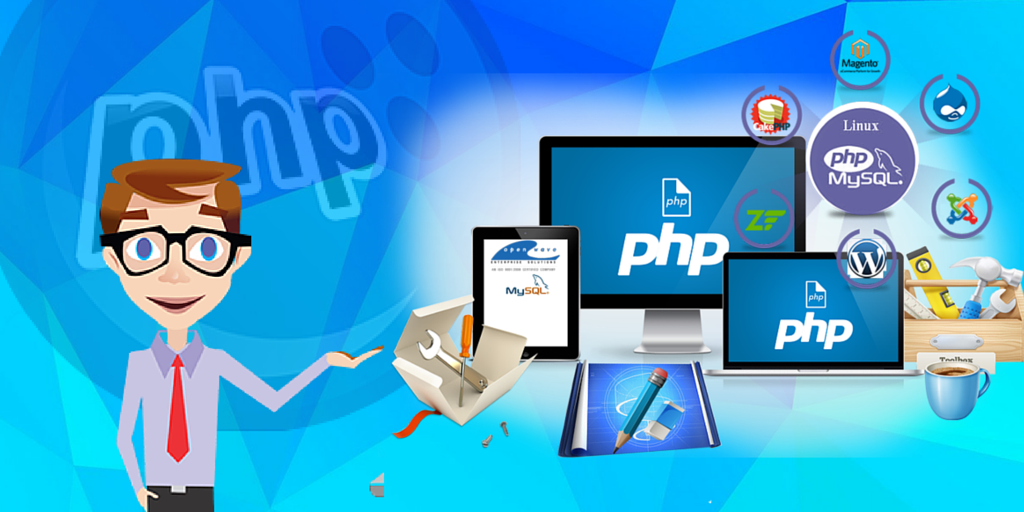
LAMP, blends PHP, MySQL into a seamless application development software. Not just anyone can build a customized LAMP-based web solutions. Hire the experts PHP at Openwave New York - has a reputation of building customized LAMP-based solutions for various client needs.
Top Trends Ruling eCommerce Development in 2016
Step
into 2016, where everything from the way we shop for clothes to book
a cab is online. With online shopping, increasing by up to 45%,
businesses that are not evolving with the changing behavioral
patterns of the customers face the risk of falling behind in the
race. With online stores like Amazon ruling the online space, setting
up a simple storefront with impressive items is no longer enough to
lure in customers.
If
you’re a business owner looking to keep up with or surpass the top
retailers, then you’ll have to continue to make strides towards
developing your eCommerce store.
Here’s
a list of the emerging trends to hit the eCommerce realm this year:
1) Smartphones will rule the roost
From
corded telephones to cell phones to Smartphones, technology has
indeed come a long way. What was once a simple communication device
is now a powerhouse on its own! For eCommerce, it only means that
online stores can tap into the potential revenue generated by
building responsive, user-centric mobile apps.
2)
Contextual shopping
Watch
out for the next big thing in eCommerce development – contextual
shopping! Providing the ultimate personalized shopping experience is
something all eCommerce stores should aim for. Thanks to the growth
in user-centric tech and IoT, contextual shopping can be so much more
than personalized greetings and item recommendations
3)
Welcome the new age of mobile payments
As
the number of people using their phones to shop has witnessed a
steady growth, it has been estimated that Smartphone revenues will
overtake the desktop revenues this year. To cash in on the trend, eCommerce development must revolve around setting up fast, secure
and seamless mobile payment systems.
4) Omni-channel is the new normal
According
to Google, 85% of shoppers begin their purchase on one device and end
it on another. Such multi-channel customers are also likely to spend
thrice as much as single-channel shoppers Having an omnichannel to
combine both your online and offline operation is the most vital
aspect of your eCommerce store’s growth.
5) Faster, better and unique services
From
flash deals to providing fast delivery services, there are several
tactics that eCommerce giants use to win customers. In 2016,
retailers must up their game and develop unique and attractive
strategies that can set them apart from their competition.
Kick-Start your eCommerce web development with Openwave to build an effective online store.
Myths revolving around Web Designing
Web Development is a vast field that sometimes gives room for misconceptions to arise. When it comes to web design, there is no sure-shot formula to success. With constant effort and steady exposure, anyone can become a good web designer. However, one needs to bear in mind the below-mentioned myths that might be invoked in the process. The problem with these myths is that once they settle down in your head, they might disrupt your further work!
Here are some common myths revolving around Web Design:
- You need to start at an early age: So why don’t you install a PC in your crib, and read programming books for bedtime stories? You can learn to design whenever you want! There is no such ironclad rule stating you should be well versed in programming by 10. Since it's an ever-changing field, it is better to take your time and go about the process of learning.
- Always code using C, C++, and Java: Agreed! These languages are most dominant in programming. However, one doesn't have to code using only these languages. So, you don’t have to worry that you learned PHP and not C as it all boils down to application and interest. Learn only that which intrigues you, and, more importantly, learn where to apply it.
- I need to be exceptionally brilliant: There exist two ways to get good at something: Be born a genius, or work harder than everyone else. But here’s the catch: for the former to happen, there's probably a one-in-a-million chance. However, hard work isn’t something that you have to be gifted to have. Although prodigious programmers are in abundance, one can also work their way up the ladder with hard work alone.
- Better design will lead to a better site: Unicorns flying around your site might be fancy, however in no world will designing on a massive scale make your site better! A site isn’t defined by the design alone, but other factors like content, view, traffic, etc. also play a vital role in a site's development.
- Designing and Developing are the same: No! They are not! Designing is the first-hand look of a website, i.e., how it looks through the user’s eyes. Developing supports the designer and makes sure things go hand-in-hand on the site.
Top 3 eCommerce Website Optimization Features

An
effectively designed eCommerce website is the most valuable for an
online business to get more sales. Have a thought about building a
website, then you should be aware that web design can be a huge
process. Here are some top 3 optimization features to get through the
overwhelming process of web design.
Quick Page Loading
Website
page loading speed is an important factor when it comes to user
experience and search engine rankings. Thereby, increasing your page
load speed is not only make your website visitors to stay a long time
but also increase your site conversion rates.
Navigation & Usability
The
navigation framework acts as a guide to all the diverse pages and
data contained inside of the website. Good navigation makes visitors
to stay and have a better experience, which in turn leads to more
sales or business for you.
Responsive
Design
With
the increase in smartphone users, the approach toward design and user
experience have changed. So, it is important to ensure that
responsive design that you provide should have an ideal viewing as
well as good users experience.
For
real serious online business you should look for the best web design
and development company like Openwave to build an effective eCommerce website
that creates value to your business.
Subscribe to:
Posts (Atom)